How Does Plastic Affect Marine Life? Species, Data, and Research

How Does Plastic Affect Marine Life? The Data Behind the Crisis
Plastic kills an estimated 100,000 marine mammals and 1 million seabirds every year, according to data from the IUCN and UNESCO. At least 700 marine species have been documented ingesting or becoming entangled in plastic debris. Affected species include surface-feeding albatrosses and organisms in the deepest ocean trenches, and the contamination now reaches back to humans through the seafood supply chain.
This is not a future projection. It is happening right now, across every ocean basin on Earth.
How Many Marine Animals Die from Plastic Each Year?
The reported numbers are almost certainly undercounts. Most marine animals that die from plastic ingestion or entanglement sink to the ocean floor and are never recovered or tallied.
The IUCN's marine plastics brief estimates that over 100,000 marine mammals die from plastic-related causes annually. UNESCO's ocean literacy programme puts seabird deaths at roughly 1 million per year. A 2021 study published in Nature Ecology & Evolution by Savoca et al. found that at least 1,565 wildlife species have ingested or become entangled in plastic — spanning marine mammals, seabirds, fish, reptiles, and invertebrates.
Plastic affects marine life through three primary mechanisms: ingestion, entanglement, and habitat alteration. Animals eat plastic because it often resembles their natural prey — plastic bags look like jellyfish, microplastic fragments resemble fish eggs, and floating debris attracts algal growth that smells like food. Entanglement in discarded fishing gear, six-pack rings, and packaging constricts movement, cuts into skin, and leads to drowning. And on beaches and seafloor habitats, accumulated plastic debris smothers ecosystems and alters the physical structure that organisms depend on. Across all of these pathways, the scale of harm tracks directly with the volume of plastic entering the ocean — currently estimated at 8 to 12 million metric tonnes per year.
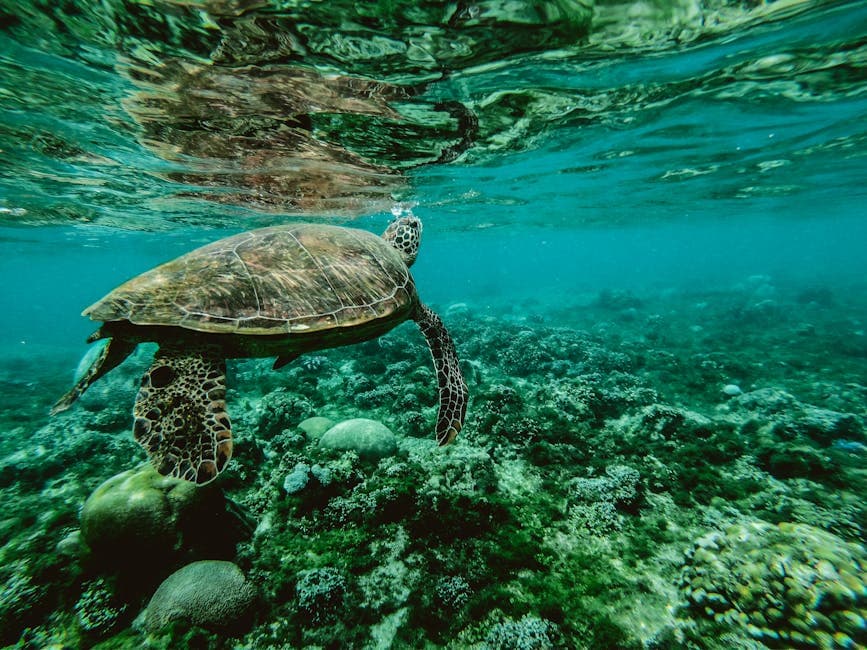
How Does Plastic Affect Sea Turtles?
All seven species of sea turtle are affected by plastic pollution, and every single one is classified as vulnerable, endangered, or critically endangered on the IUCN Red List.
A landmark 2014 study by Schuyler et al. published in Global Change Biology analysed data from multiple ocean regions and found that 52% of all sea turtles worldwide have ingested plastic debris. The study identified the highest-risk zones in waters off eastern Australia, the coast of North America, and the eastern Indian Ocean — areas where turtle feeding grounds overlap with concentrated plastic pollution.
Sea turtles are particularly vulnerable because their diet makes them prone to misidentification. Leatherbacks, which feed almost exclusively on jellyfish, frequently swallow translucent plastic bags and film. Once swallowed, plastic blocks the digestive tract, creates a false sense of fullness, and slowly starves the animal. A 2018 study by Wilcox et al. in Scientific Reports calculated that ingesting just one piece of plastic gives a sea turtle a 22% chance of death, and that number rises sharply with each additional piece — 14 pieces means a 50% mortality probability.
Entanglement is equally lethal. Discarded fishing line, ghost nets, and six-pack rings wrap around flippers and necks, restricting movement and causing deep lacerations. Juveniles are especially at risk because they feed in convergence zones where floating plastic accumulates.
Beach plastic also threatens the next generation. Female sea turtles lay their eggs in sandy nests on shorelines. Plastic debris embedded in sand alters nest temperature — which determines the sex of hatchlings — and can physically block hatchlings from emerging. Research published by Beckwith and Fuentes (2018) in Marine Pollution Bulletin documented plastic contamination in nesting habitats across the Florida coast, a region critical for loggerhead turtle reproduction.
How Does Plastic Affect Whales and Dolphins?
Whales and dolphins face plastic threats from both ingestion and entanglement, with documented cases growing sharply over the past two decades.
In March 2019, a young Cuvier's beaked whale washed ashore in the Philippines with 40 kg of plastic bags in its stomach, as reported by National Geographic. The whale had starved. Its stomach was so packed with plastic that no food could pass through. This case was not an anomaly. In 2018, a pilot whale died in Thailand after swallowing 80 plastic bags, and a sperm whale that stranded on a Scottish beach in 2019 had a 100 kg ball of fishing nets, rope, and plastic packaging compacted in its stomach.
A 2019 analysis published in Marine Pollution Bulletin by Lusher et al. reviewed stomach content studies across 80+ cetacean species and found plastic debris in over 56% of all cetacean species examined. Baleen whales are particularly exposed because they gulp massive volumes of water when feeding — a single blue whale can filter 80,000 litres per day, ingesting any microplastics suspended in that water. A 2022 Stanford study published in Nature Communications estimated that fin whales feeding off the California coast swallow up to 10 million microplastic particles per day.
Ghost fishing nets — nets lost or abandoned at sea — are the single largest entanglement threat. The World Animal Protection organisation estimates that 640,000 tonnes of ghost gear enter the ocean each year. These nets drift for decades, trapping whales, dolphins, and seals in weighted underwater snares that drag animals down and drown them.