Blog.

How Much Plastic Is in the Ocean? Latest Statistics (2026)

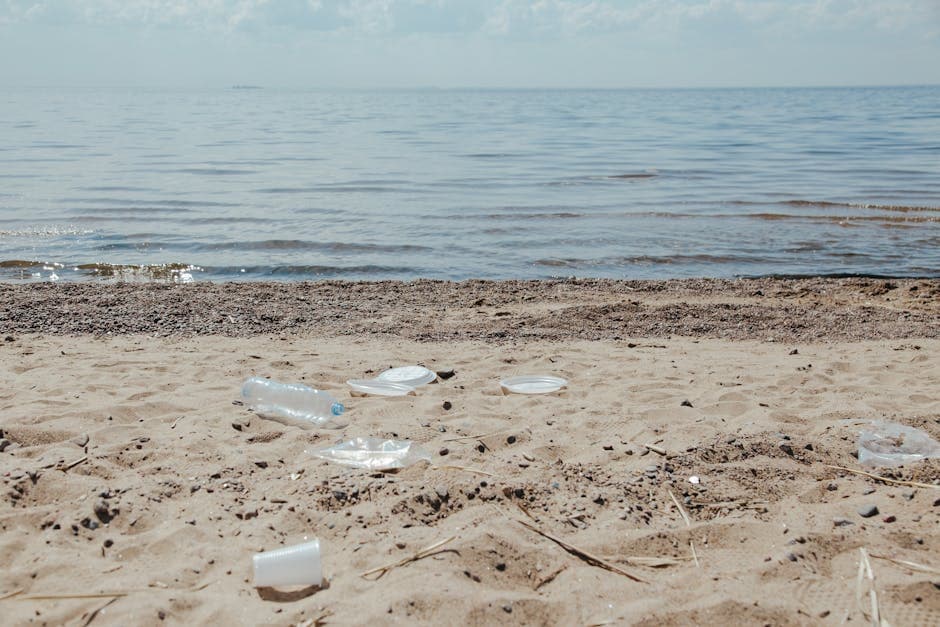
Cover Image for How Much Plastic Is in the Ocean? Latest Statistics (2026)
Toby Stapleton
Toby Stapleton

How Much Plastic Is in the Ocean? The Numbers Behind the Crisis

Between 82 and 358 trillion plastic particles currently float on the ocean surface, weighing an estimated 2.4 to 4.9 million tonnes. That range — published by the 5 Gyres Institute in their 2023 global assessment — represents the most comprehensive count of floating ocean plastic ever conducted. And it almost certainly underestimates the full picture, because it only measures what floats. The ocean floor holds millions of tonnes more.

These numbers are not abstract. They translate into measurable contamination across all ocean basins, depth layers, and the tissues of marine species throughout the food chain. Here is what the latest research tells us about the scale of plastic in the ocean as of 2026.

How Much Plastic Enters the Ocean Each Year?

An estimated 19 to 23 million tonnes of plastic waste leak into aquatic ecosystems annually, according to the United Nations Environment Programme (UNEP). That figure includes rivers, lakes, and oceans, though the majority ultimately reaches the sea.

To make that tangible: 19 million tonnes per year works out to roughly 52,000 tonnes per day, or about one garbage truck's worth of plastic dumped into the ocean every 60 seconds. The analogy has been used so widely it risks losing its punch, but the arithmetic behind it is real.

Not all of this plastic stays on the surface. Research suggests that what we see floating represents only about 1% of the plastic that has entered the ocean since large-scale production began in the 1950s. The rest has sunk, fragmented into particles too small to detect with current methods, washed onto shorelines, or been ingested by marine organisms.

Where does it come from? Approximately 80% originates on land — from mismanaged waste, littering, industrial spillage, and stormwater runoff that carries plastic from streets into drains, rivers, and eventually the coast. The remaining 20% comes from sea-based sources: fishing gear lost or abandoned at sea, shipping containers that fall overboard, and direct discharge from vessels. For a full breakdown of pathways, see our post on how plastic ends up in the ocean.

What Types of Plastic Are Floating in the Ocean?

Ocean plastic is categorised by size, and the proportions matter because they determine which removal strategies can work — and which cannot.

Microplastics (smaller than 5 mm) dominate by count. These fragments result from the degradation of larger items through UV radiation, wave action, and mechanical abrasion. They include fibres shed from synthetic clothing during washing, microbeads from personal care products (now banned in many countries), and pellets (nurdles) lost during manufacturing and transport. A 2023 meta-analysis found that microplastics account for over 90% of floating ocean plastic particles by number — trillions upon trillions of fragments small enough to be mistaken for plankton by filter-feeding organisms.

Mesoplastics (5–25 mm) are the mid-range: bottle caps, broken fragments, pieces of packaging still recognisable as human-made objects but too degraded to identify their original product. These are transitional — they were once macroplastics and are on their way to becoming microplastics.

Macroplastics (larger than 25 mm) contribute less by count but more by mass. This category includes intact bottles, bags, fishing nets, crates, containers, and industrial packaging. Ghost nets, abandoned or lost fishing gear, are particularly destructive because they continue to trap marine life indefinitely in a process called ghost fishing. In the Great Pacific Garbage Patch, ghost nets account for an estimated 46% of the total mass.

Where Does Ocean Plastic Accumulate?

Plastic does not distribute evenly across the ocean. It concentrates in predictable zones based on currents, geography, and the physical properties of different polymers.

Surface accumulation zones. The five major subtropical ocean gyres — rotating current systems in the North Pacific, South Pacific, North Atlantic, South Atlantic, and Indian Ocean — trap floating debris in their relatively calm centres. The North Pacific Gyre holds the largest concentration, known as the Great Pacific Garbage Patch, which spans approximately 1.6 million km² and contains an estimated 1.8 trillion pieces of plastic according to Lebreton et al. (2018). The North Atlantic Garbage Patch, centred in the Sargasso Sea region, is the second most studied.

Coastal zones and river mouths. The highest densities of plastic often occur not in the open ocean but along coastlines — especially near the mouths of rivers that drain densely populated or poorly waste-managed regions. Approximately 1,000 rivers have been identified as contributing 80% of riverine plastic input to the ocean, with the highest flows from waterways in Southeast Asia, South Asia, and West Africa.

The deep ocean floor. This is where the majority of ocean plastic likely ends up. A study published in Frontiers in Marine Science estimated that between 3 and 11 million tonnes of plastic rest on the seafloor — far exceeding the surface count. Dense polymers like PVC and PET sink relatively quickly, while even buoyant plastics eventually become weighted down by biofouling (colonisation by algae and organisms) and settle.

Polar regions. Arctic sea ice has been found to contain high concentrations of microplastics — trapped during ice formation and released as the ice melts. Studies have detected up to 12,000 microplastic particles per litre in some Arctic ice cores, making the polar regions an unexpected reservoir.

Join the movement

Turn plastic waste into prosperity

Plastic Bank pays collectors in coastal communities to gather plastic before it reaches the ocean. Join 26,000+ members already taking action — free to start, your first 50 bottles are on us.

Register with email

9.4 billion bottles collected · 62,918 collectors · 6 countries

How Does Plastic Reach the Ocean from Land?

The dominant pathway is through rivers. Research over the past decade has mapped the relationship between river systems and ocean plastic input in increasing detail. A 2021 study estimated that approximately 1,000 rivers contribute 80% of the total riverine plastic flow, overturning an earlier assumption that just 10 rivers were responsible.

The factors that determine how much plastic a river carries include population density along the waterway, the availability and quality of waste collection infrastructure, rainfall patterns (heavy rains flush accumulated litter into waterways), and the presence of barriers like dams that can trap or redirect floating debris.

In countries with extensive formal waste collection, comparatively little plastic reaches waterways. In regions where waste management infrastructure is underfunded or absent, open dumping near rivers and canals creates direct conduits to the ocean. This is not a reflection of individual behaviour — it is a systems failure in waste infrastructure.

This upstream geography is exactly why source interception strategies have gained traction among environmental economists. Organisations working at the source, such as Plastic Bank's recovery programme, have collected over 9.4 billion plastic bottles by paying coastal collection community members to intercept waste before it reaches waterways. That model, paying people in vulnerable coastal communities to gather and sell plastic for recycling, has demonstrated that economic incentives can create durable waste collection systems where formal infrastructure does not yet exist. Plastic Bank's live plastic tracker shows real-time collection data across the Philippines, Indonesia, Brazil, Egypt, and Thailand.

How Fast Are Ocean Plastic Levels Rising?

The trend is accelerating, not stabilising.

Global plastic production has grown from roughly 2 million tonnes per year in 1950 to over 400 million tonnes per year in 2024, and that figure is projected to continue climbing. Production has risen approximately 70% since 2005 alone, according to industry data.

The 5 Gyres Institute's 2023 assessment found that the concentration of floating ocean microplastics has increased rapidly in recent years — outpacing predictions based on production data alone. This suggests that the lag between plastic entering the ocean and fragmenting into detectable microplastics may be shrinking, or that more plastic is reaching the ocean than models assumed.

Looking forward, the projections are stark:

  • The OECD estimates that the flow of plastic from rivers to the ocean will roughly double to 3.6 million tonnes per year by 2060 if current trends continue.
  • The Pew Charitable Trusts and SYSTEMIQ Breaking the Plastic Wave report (2020) concluded that without comprehensive action, the total volume of plastic entering the ocean could triple by 2040 compared to 2016 levels.
  • UNEP's projected scenario shows annual ocean plastic input reaching 29 million tonnes per year by 2040 in a business-as-usual trajectory.

None of these projections assume zero action — they assume current policies remain roughly unchanged. Every tonne of new waste management capacity, every collection programme, and every material substitution pushes the actual outcome below the projection.

How Does Ocean Plastic Affect Marine Life?

The biological consequences are now documented across hundreds of species and every ocean basin.

Ingestion is the most widespread impact. A meta-analysis published in Global Change Biology found that 36.5% of fish sampled globally contained microplastics in their digestive tracts. Seabirds fare worse — an estimated 90% of seabird species have ingested plastic, and that figure is projected to reach 99% by 2050. Sea turtles, marine mammals, and filter-feeding organisms like mussels and oysters are also affected.

Plastic ingestion causes physical harm — internal injuries, blockages, false satiation leading to starvation — but the chemical effects may be equally damaging. Plastics absorb persistent organic pollutants (POPs) from seawater, concentrating toxins like PCBs, DDT, and flame retardants at levels 100 to 1,000 times higher than the surrounding water. When ingested, these chemicals leach into animal tissues and biomagnify through the food chain. This has implications not just for marine ecosystems but for human health, since many of these species are commercially harvested.

Entanglement kills an estimated 100,000 marine mammals and sea turtles each year, primarily from ghost nets and other abandoned fishing gear. The impact is particularly severe for endangered species with small populations, where even modest mortality rates can threaten species viability.

What Is the Full Scale of Ocean Plastic? A Summary in Numbers

Metric Value Source
Floating plastic particles (surface) 82–358 trillion 5 Gyres Institute (2023)
Mass of floating surface plastic 2.4–4.9 million tonnes 5 Gyres Institute (2023)
Annual plastic input to oceans 19–23 million tonnes UNEP
Plastic on the deep ocean floor 3–11 million tonnes Frontiers in Marine Science
Pieces in the Great Pacific Garbage Patch 1.8 trillion Lebreton et al. (2018), Nature
Fish containing microplastics 36.5% Global Change Biology
Seabird species ingesting plastic 90% CSIRO / PNAS (2015)
Marine species affected by plastic debris 700+ IUCN
Rivers contributing 80% of ocean plastic ~1,000 Various studies (2017–2021)
Projected annual ocean input by 2040 29 million tonnes UNEP (BAU scenario)
Projected ocean input tripling by 2040 3× 2016 levels Pew/SYSTEMIQ Breaking the Plastic Wave
Projected river-to-ocean flow by 2060 3.6 million tonnes/year OECD Global Plastics Outlook
Global plastic production (2024) ~400+ million tonnes/year Plastics Europe
Production growth since 2005 ~70% increase Industry data

What Is Being Done to Reduce Ocean Plastic?

Action is happening on multiple fronts, though none yet matches the scale of the problem.

International policy is advancing through the UN Global Plastics Treaty negotiations, which aim to establish a binding international framework covering plastic's full lifecycle. The treaty negotiations (INC process) continue through 2026, with signatory nations divided on whether to include production caps or focus solely on waste management. Regardless of outcome, the treaty has already accelerated national legislation in dozens of countries.

National and regional regulation has expanded rapidly. Over 140 countries have enacted some form of single-use plastic ban or levy. Extended Producer Responsibility (EPR) schemes — which make producers financially responsible for end-of-life management of their plastic packaging — are now mandatory in the EU, several ASEAN nations including the Philippines, and are under consideration in the US.

Collection and recovery at the source remains the most cost-effective intervention according to economic analyses. The Pew/SYSTEMIQ Breaking the Plastic Wave report found that upstream interventions — reducing unnecessary plastic, substituting materials, improving waste collection, and expanding recycling capacity — could collectively reduce annual ocean plastic input by 80% by 2040. This is where programmes that mobilise communities in high-leakage geographies make the largest measurable difference, because they operate exactly where the gap between waste generation and waste collection is widest. For a deeper look at the numbers behind ocean plastic pollution, see our ocean pollution facts page.

Cleanup operations target plastic already in the ocean — both in the open-ocean gyres and in river systems. These efforts are valuable for removing legacy pollution but cannot keep pace with the input rate. Until annual input drops below annual removal, the total stock of ocean plastic will continue to grow.

What Would It Take to Reverse the Trend?

The Breaking the Plastic Wave analysis modelled a scenario in which ocean plastic input drops by 80% by 2040. Achieving that requires simultaneous action across the full plastic value chain: eliminating unnecessary plastic items, shifting to reuse models where possible, ensuring all remaining plastic is collected and recycled or disposed of safely, and expanding collection infrastructure in the regions where leakage is highest.

No single intervention reaches the 80% target alone. Recycling helps but cannot absorb the volume. Cleanup removes legacy pollution but doesn't stop the flow. Bans on specific items reduce input at the margins. The only pathway that matches the scale of the problem is a combination of all approaches, with the largest gains coming from waste collection in under-served coastal regions.

For the broader context on ocean pollution beyond plastics, see our compilation of plastic pollution facts.

Key Takeaways

The ocean contains between 82 and 358 trillion plastic particles on its surface alone, with millions of tonnes more resting on the seafloor. Between 19 and 23 million tonnes of new plastic enter aquatic ecosystems every year — a rate that is projected to double or triple within the next two decades unless production and waste management systems change fundamentally. Microplastics have been detected in 36.5% of sampled fish, 90% of seabird species, and every ocean basin from the equator to the Arctic. The data points toward a clear conclusion: the most effective and cost-efficient way to reduce ocean plastic is to intercept it before it reaches the water, through scaled collection, improved waste infrastructure, and economic incentives for recovery in the coastal communities where leakage is highest.


Sources:

  • 5 Gyres Institute (2023). Global estimate of floating ocean plastic. 5gyres.org
  • United Nations Environment Programme. Plastics and pollution data. unep.org
  • Lebreton, L., et al. (2018). "Evidence that the Great Pacific Garbage Patch is rapidly accumulating plastic." Nature Scientific Reports. doi:10.1038/s41598-018-22939-w
  • Jambeck, J.R., et al. (2015). "Plastic waste inputs from land into the ocean." Science. doi:10.1126/science.1260352
  • Pew Charitable Trusts & SYSTEMIQ (2020). Breaking the Plastic Wave
  • OECD. Global Plastics Outlook. oecd.org
  • CSIRO / Wilcox et al. (2015). "Threat of plastic pollution to seabirds." PNAS.